Older San Francisco properties in the Mission District, Pacific Heights, and Noe Valley feature balloon-frame timber framing and common lightwells that function as natural rodent corridors. Norway rats and house mice…
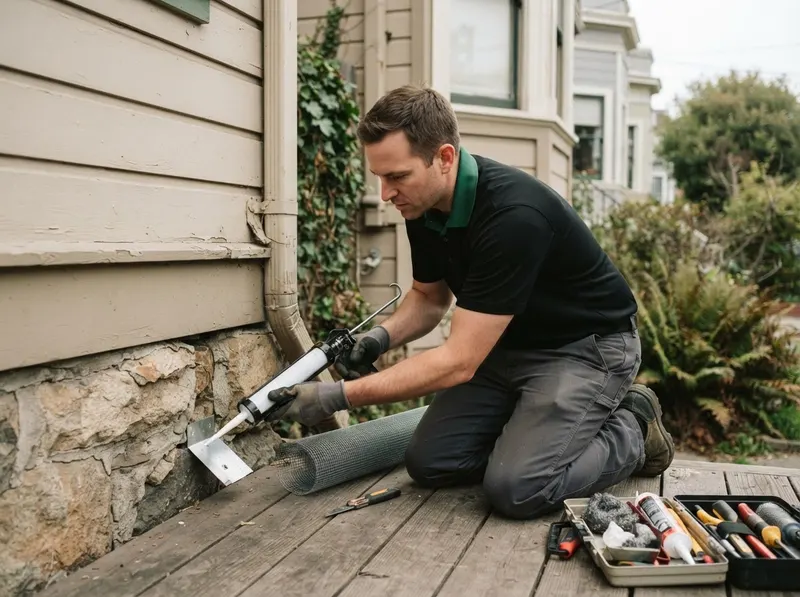
Older San Francisco properties in the Mission District, Pacific Heights, and Noe Valley feature balloon-frame timber framing and common lightwells that function as natural rodent corridors. Norway rats and house mice exploit continuous utility lines, historic redwood foundations, and gaps beneath decorative bay windows to move across contiguous multi-family parcels. When entry points remain unsealed, snap traps and interior baiting offer only temporary population control because exterior populations immediately reinvade the warm void spaces. Architectural exclusion resolves this issue by mechanically fortifying the building perimeter, neutralizing subterranean runs, and cutting off shared subfloor channels.
In ocean-adjacent neighborhoods such as the Sunset District and Richmond District, high coastal humidity and shifting sand dunes frequently corrode non-galvanized foundation screens and undermine perimeter concrete skirts. Technicians mechanically reinforce crawlspace access hatches, foundation vents, and roofline transition points using heavy-gauge welded mesh that resists salt air deterioration and rodent chewing. For modern high-density lofts in SoMa and brick multi-unit structures across North Beach, utility conduit penetrations and commercial trash chute interfaces represent the primary structural vulnerabilities requiring commercial-grade silicone sealants and metal backing plates.
Selecting permanent structural exclusion over recurring toxic bait stations eliminates pesticide exposure risks for indoor domestic pets and children, ensuring compliance with strict San Francisco Department of Public Health habitability standards. While chemical poisons leave rodents to expire and decay inside inaccessible lath-and-plaster walls, causing severe odor issues, physical exclusion physically denies harbor. The financial trade-off involves a higher upfront mechanical expense, starting at our $200 minimum service fee, to avoid indefinite monthly maintenance contracts and perpetual tenant pest complaints across Marina District and Bernal Heights residences.
Every job gets a firm, written price after a free on-site visit.
Tell us about your residential rodent exclusion job in San Francisco and we'll send a clear, written quote, usually the same day.
 Kelvex Extermination