Historic multi-family architecture across San Francisco presents unique structural vulnerabilities. Edwardian and Victorian multi-family buildings in the Mission District, Pacific Heights, and Noe Valley share…
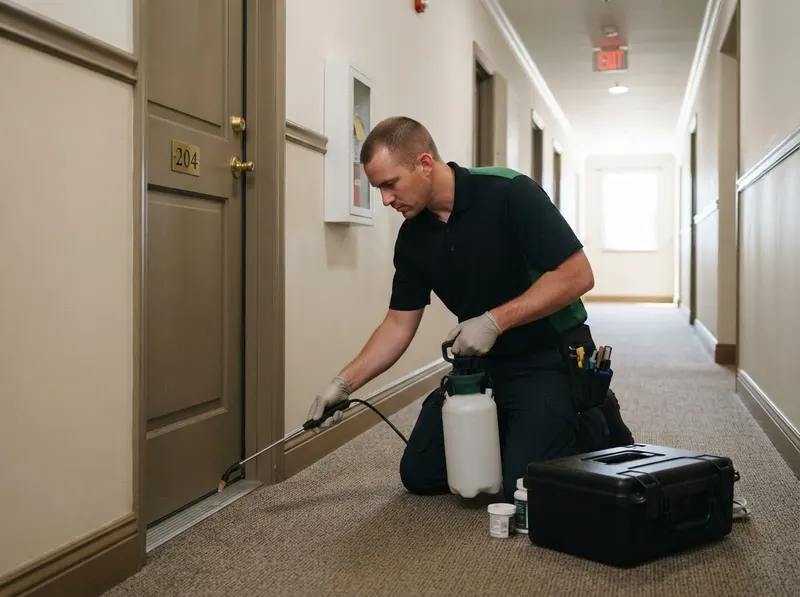
Historic multi-family architecture across San Francisco presents unique structural vulnerabilities. Edwardian and Victorian multi-family buildings in the Mission District, Pacific Heights, and Noe Valley share contiguous party walls, unsealed subfloors, and interconnected pipe runs. When German cockroaches or rodent populations establish nests in ground-floor utility bays or shared basement storage, structural pathways allow them to radiate upward into residential living spaces. Multi-unit common area management focuses strictly on the communal infrastructure: trash vestibules, elevator shafts, sub-sidewalk vaults, and shared service chases. Sealing entry points at these communal intersections protects individual units without subjecting closed-window residential apartments to broad chemical broadcasts.
Dense concrete and masonry structures in SoMa and the Marina District experience intense pressure from subterranean sewer roaches and roof rats entering through subgrade plumbing penetrations. Common area management targets these primary building vulnerabilities using localized, bio-rational baits, micro-encapsulated formulations, and non-corrosive physical exclusion materials like heavy-gauge copper mesh and elastomeric sealants. Unlike reactive in-unit spot treatments that disperse pests into neighboring walls, structured communal management eliminates the harboring core inside service shafts. This systemic containment satisfies San Francisco Department of Public Health habitability standards and resolves cross-unit tenant disputes by addressing the root source within shared mechanical rooms rather than treating isolated kitchen cabinets.
Large apartment communities near Golden Gate Park and coastal properties throughout the Richmond District and Sunset District frequently contend with seasonal rodent migrations driven by fog and low evening temperatures. Exterior perimeter barriers paired with non-toxic physical containment inside trash collection alcoves restrict rodent access before pests penetrate structural framing. Multi-unit common area treatments are designed for property owners who need verified eradication of structural pests without mandatory recurring lock-in contracts. Ballpark rates for common area cleanouts begin at our $200 minimum baseline, with exact cost confirmed on-site following structural transit inspection. Managers can reach Kelvex Extermination at (628) 277-3081 to coordinate building envelope evaluations.
Every job gets a firm, written price after a free on-site visit.
Tell us about your multi-unit common area pest management job in San Francisco and we'll send a clear, written quote, usually the same day.
 Kelvex Extermination