Multi-family buildings across San Francisco neighborhoods like the Mission District, North Beach, and SoMa present acute structural challenges for German cockroach eradication. Blattella germanica populations exploit…
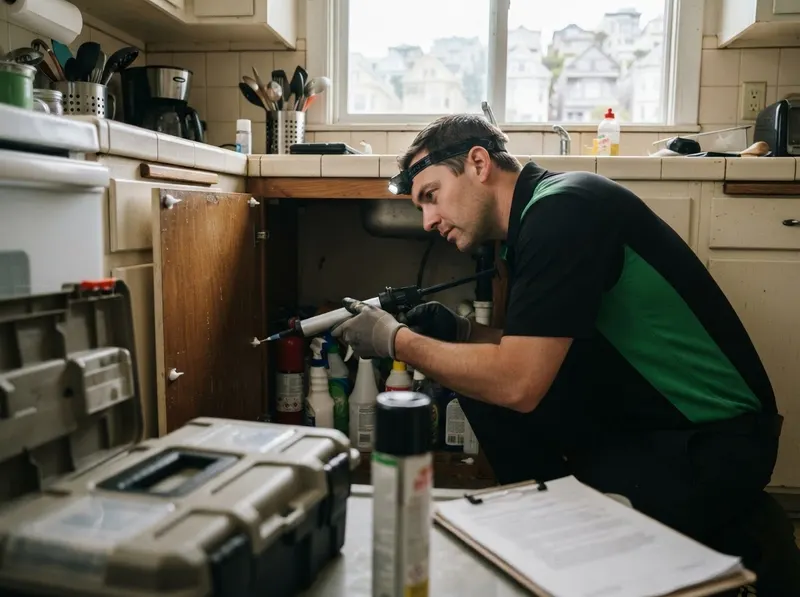
Multi-family buildings across San Francisco neighborhoods like the Mission District, North Beach, and SoMa present acute structural challenges for German cockroach eradication. Blattella germanica populations exploit shared plumbing chases, electrical conduits, and historic lath-and-plaster wall cavities between adjoining units. Standard retail aerosol pyrethroids scatter gravid females deeper into neighboring wall voids rather than resolving the breeding locus. Kelvex Extermination deploys non-repellent gel matrices combined with juvenile hormone mimics that halt the nymph-to-adult molting cycle. This precise delivery targets localized harborage areas under sub-counter hinges, behind refrigerator compressor coils, and inside dead-space cabinetry without contaminating living spaces.
In older Victorian and Edwardian flats found throughout Noe Valley, Pacific Heights, and the Richmond District, settling foundations create unsealed sub-baseboard gaps leading directly into unconditioned floor spaces. If an infestation is isolated to a single apartment kitchen, precise localized placement of abamectin or indoxacarb bait matrixes ensures foraging roaches transfer the active toxicant back to the harborage aggregation via coprophagy. If structural gaps span multiple adjoined flats or wet walls, treatment protocols expand to include structural void injection of amorphous silica dust and targeted perimeter exclusion along pipe sleeves. Choosing targeted precision baiting over broad chemical fogging eliminates airborne pesticide residue, satisfying California Title 25 habitability standards and maintaining compliance with San Francisco Department of Public Health guidelines.
Dense coastal microclimates in the Sunset District and Marina District generate localized indoor humidity pockets around steam pipes, dishwasher kickplates, and under-sink drains that sustain elevated ootheca hatching rates. German cockroach egg cases contain roughly 30 to 48 nymphs, which mature into reproductive adults in approximately 50 to 60 days under standard indoor temperatures. Remediation sequencing addresses this biological timeline in concrete numbered stages: 1. Mechanical monitoring and flush detection to trace migration pathways through common wet walls; 2. Micro-placement of target-specific gel baits within 12 inches of verified aggregation sites; 3. Application of non-repellent insect growth regulators to interrupt reproduction; 4. Mechanical sealing of pipe penetrations measuring 1/16 inch or wider using high-temp silicone or copper mesh.
Every job gets a firm, written price after a free on-site visit.
Tell us about your german cockroach precision remediation job in San Francisco and we'll send a clear, written quote, usually the same day.
 Kelvex Extermination